Pages

Showing posts sorted by date for query The Quilt Show. Sort by relevance Show all posts

Wednesday, August 2, 2023

Tamarack Jacket from an old quilt


Yes – it’s kinda crazy! This is the jacket I made from an old, damaged quilt. Overall, I love it, even though it’s rather weird because of the large-scale design on the quilt. Here are the details:

I used the Tamarack Jacket pattern by Grainline Studio, and it was terrific. Very clear and well-written. (The designer also has a series of wonderfully instructive videos on YouTube that walk you through every step. Highly recommend.) This is a great pattern if you are someone who does not do much garment construction (or any). I have limited experience (my mom’s instruction; she was a home economics teacher before I was born), and making a bunch of Halloween costumes for my kids when they were little. I made this jacket in one (long) day in my studio.

I used my regular size (there's guidance for measuring yourself and using the sizing chart that is very helpful). The finished coat fits me very well. I love that it's not overly bulky through the arms, because that can make you look like the Stay-Puft Marshmallow Man. It has small darts at the bust that also help it fit well.

I chose this pattern because it is pretty simple, with large uninterrupted areas for quilt pattern to show, and I made it simpler by leaving off the pockets (because of the green and red applique design running down the front panels). I also made it 6 inches longer. The original falls at the hips (usually not a flattering look on me), and I wanted to feature more of the quilt design. 


If you are working from regular fabric (not a quilt), the instructions have you cut out all the pattern pieces from all three layers of what quilters call “the quilt sandwich” – the top, the batting, and the backing – and then layer them and quilt them. I’d recommend cutting out all the pieces with about 1” extra, quilting it, and then cutting out the pattern pieces, because if you quilt heavily, it’s going to shrink in size, sometimes a LOT, in my experience.


There’s binding around all the outer edges, but next time, I may just roll the edges under, like I did on the sleeve cuffs. I also ended up folding under the front edges of the jacket (the placket) and stitching them down, because there was way too much overlap (I think I cut out the pattern designed for buttons and button holes). And I rather liked how it looked with the pattern going all the way to the edge, without being interrupted by a binding. If I do bind the edges, I’ll stitch the first side on by machine and finish on the back with hand stitching. I can do a much prettier job by hand.


You can order a paper pattern, but as usual, I wanted it NOW. So I downloaded the PDF pattern (it comes in tiles/sections and you print them out and tape them together.) I’m going to make this jacket again, probably with pockets. Maybe with a quilt of my own design. The main pattern comes with patterns and instructions for a welt pocket, and Grainline also makes a pattern for a hood, collar and patch pockets, if you want those.


The old quilt I used had extremely thin batting (before cutting it open, I wouldn’t have believed that it had any batting at all). I think it may have been hand-carded cotton. I love how lightweight and drapey it is. So when I do it again, I will probably use the thinnest cotton or wool I can find. I haven’t done any kind of closures yet, and I may not do any.

https://grainlinestudio.com/products/tamarack-jacket?variant=22533585502290

Tamarack Jacket ($20 for paper pattern, $18 for a PDF)

Tamarack Hood, Collar & Patch Pockets Variation Add-on ($12, PDF only) 


Wednesday, October 5, 2022

Quilting Arts TV Series 2900 is here!


Series 2900 of Quilting Arts TV is out! It will soon start airing on many PBS stations across the country, and is now available for purchase (as individual shows, series, or the entire QATV library). (See more information below.)

This new series will features guests Lea McComas, Denise Labadie, Helen Parsons, Valerie Goodwin, Carolina Asmussen, Luana Rubin, Margaret Abramshe, Heidi Zielinski, Valerie White, and Barbara Yates Beasley.

On TV: Visit your local Public Television station’s website to see if the show is available in your area!

Get access to all 29 seasons: Video Downloads or Stream All Episodes on Quilting Daily
EPISODE 2901: Layers
Today’s guests add depth and dimension to their artwork by building their quilted compositions one layer at a time. Lea McComas creates her complex quilts by adding elements from background to foreground, stitching each layer before adding the next. Heidi Zielinski creates pieced strata from short strips, paying attention to basic design principles as she makes her work.

EPISODE 2902: Slicing and Dicing
Technology plays a role in this episode as Valerie Goodwin works with a laser cutter to precisely cut fabric for her intricate map quilts. Next, Margaret Abramshe reinvents her less-than-favorite quilts by isolating focal images, cutting them apart, and assembling the pieces into entirely new works.

EPISODE 2903: Creating Transparency
Artistry is enhanced by the depth and complexity achieved through transparency. Helen Parsons mixes translucent layers of fabric paint using acrylic craft paint and textile medium for her work. Valerie Goodwin creates collages by layering sheer and opaque fabrics and adding hand stitching.

EPISODE 2904: Exploring the Quilted Stitch
Artistry abounds when art quilters stitch and sew by machine! Margaret Abramshe uses her knowledge of the human facial structure to guide her quilting and create contour lines. Next, using a longarm machine, Carolina Asmussen introduces couching work into free-motion quilting.

EPISODE 2905: Back to Art School
It’s back to school—art school, that is!—for refreshers in creativity that every artist can use. Lea McComas demonstrates how using a single point of perspective creates depth in her compositions. Next, Barbara Yates Beasley focuses on creating realistic eyes.

EPISODE 2906: The Art of Being an Artist
Meaningful artwork comes from thoughtful expression. Launa Rubin discusses the importance of creating quilts with powerful messages. Next, host Susan Brubaker Knapp demonstrates how she creates quick, custom artwork that enables her to reach a wider audience.

EPISODE 2907: Picture This!
Taking great photos is the first step for these quilters. Barbara Yates Beasley shows how she creates patterns from photographs for pet portrait quilts. Helen Parsons explains how she photographs her subjects for her art quilts, with tips on layout, lighting, and composition.

EPISODE 2908: Let’s Go!
Travel can have an enormous influence on the work of any artist. Luana Rubin shares some of the great quilts she saw at Quilt Canada 2022. Valerie Goodwin uses the map as a jumping off place for her art and explains how she creates map-themed art with a sense of place.

EPISODE 2909: Contemporary Appliqué
Mastering new techniques takes time and practice. This episode features Carolina Asmussen’s machine quilting, which pairs raw-edge appliqué with floral free-motion for a contemporary look. In addition, learn from Denise Labadie how mixing appliqué styles can create realistic stone textures.

EPISODE 2910: Paint and Dye
Art quilters explore many ways of applying color to fabric. Helen Parson’s “paints” are actually finely cut strips of fabric that she stitches with thread. Artist Valerie White showcases basic techniques for transferring images using disperse dyes.

EPISODE 2911: Surface Design Sampler
Pattern your own cloth with surface design! Valerie White creates texture with oil paints in a solid stick form to create texture and visual interest. Denise Labadie makes the stone fabrics in her work using paints and resists.

EPISODE 2912: Artful Imagery
There are many ways to apply imagery to a piece of quilted art. Lea McComas teaches her method for re-sizing human figures within a composition, so each appears in correct proportion. Heidi Zielinski uses paint to stamp imagery onto fabric or directly onto quilt tops to incorporate motifs without drawing.

EPISODE 2913 Exploring Color
Color is a big part of every artist’s work. Denise Labadie’s landscapes and skies are made with free-form strip piecing that create what she calls “color complexity.” Heidi Zielinski makes small collages that revolve around one color on the color wheel, and adds blending or contrasting stitching and beadwork.

Valerie Goodwin

Valerie White

Barbara Yates Beasley

Carolina Asmussen

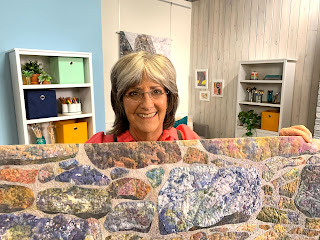
Denise Labadie

Heidi Zielinski

Helen Parsons

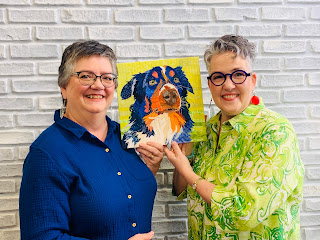
Lea McComas


Luana Rubin

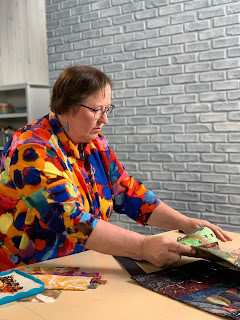
Margaret Abramshe


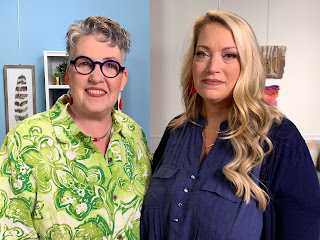
Me!

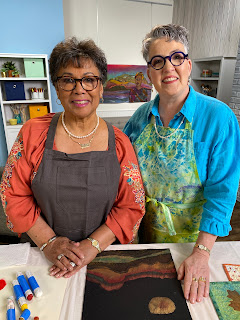
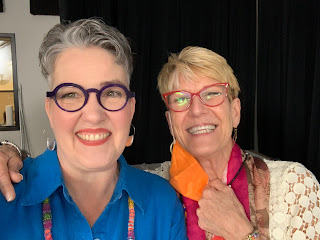
with Jeanne Cook Delpit


Tuesday, July 26, 2022

Quilting Arts TV – Series 2900

After several years of craziness because of COVID, we shot the 2900 Series of Quilting Arts TV last week! I had to skip the last taping because I have some health issues that put me at higher risk for COVID. 

The shows will start airing on many PBS stations across the country, and will be available for purchase (as individual shows, series, or the entire QATV library) in October. (See more information below.)

This new series will features guests Lea McComas, Denise Labadie, Helen Parsons, Valerie Goodwin, Carolina Asmussen, Luana Rubin, Margaret Abramshe, Heidi Zielinski, Valerie White, and Barbara Yates Beasley. If you follow me on social media, you can see lots of photos of the guests and the projects and techniques they are demonstrating (July 18-22, 2022) here: 

INSTAGRAM: https://www.instagram.com/susanbrubakerknapp/

FACEBOOK: https://www.facebook.com/SusanBrubakerKnappFiberArtist/

We shot the show at Golden Peak Media Studios in Golden, Colorado, for the first time (Golden Peak Media owns Quilting Arts Magazine) with an entirely new production team, and had the opportunity to refresh the set, which features a more neutral backdrop that really makes the art and guests shine. There’s new lighting and camera equipment, and the light on set has a different quality, too. 

BERNINA machines – the 570 QE, 770 QE, and the Q 20 longarm – were on set, as usual. BERNINA has been our sponsor since the show began!

On TV: Visit your local Public Television station’s website to see if the show is available in your area!

Get access to all 29 seasons: Video Downloads or Stream All Episodes on Quilting Daily


Valerie Goodwin

Valerie White

Barbara Yates Beasley

Carolina Asmussen

Denise Labadie

Heidi Zielinski

Helen Parsons

Lea McComas


Luana Rubin

Margaret Abramshe


Me!

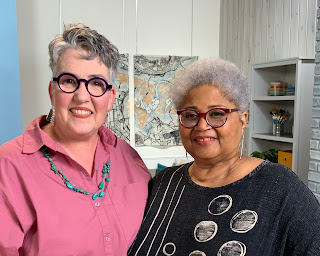
with Jeanne Cook Delpit


EPISODE 2901: Layers
Today’s guests add depth and dimension to their artwork by building their quilted compositions one layer at a time. Lea McComas creates her complex quilts by adding elements from background to foreground, stitching each layer before adding the next. Heidi Zielinski creates pieced strata from short strips, paying attention to basic design principles as she makes her work.

EPISODE 2902: Slicing and Dicing
Technology plays a role in this episode as Valerie Goodwin works with a laser cutter to precisely cut fabric for her intricate map quilts. Next, Margaret Abramshe reinvents her less-than-favorite quilts by isolating focal images, cutting them apart, and assembling the pieces into entirely new works.

EPISODE 2903: Creating Transparency
Artistry is enhanced by the depth and complexity achieved through transparency. Helen Parsons mixes translucent layers of fabric paint using acrylic craft paint and textile medium for her work. Valerie Goodwin creates collages by layering sheer and opaque fabrics and adding hand stitching.

EPISODE 2904: Exploring the Quilted Stitch
Artistry abounds when art quilters stitch and sew by machine! Margaret Abramshe uses her knowledge of the human facial structure to guide her quilting and create contour lines. Next, using a longarm machine, Carolina Asmussen introduces couching work into free-motion quilting.

EPISODE 2905: Back to Art School
It’s back to school—art school, that is!—for refreshers in creativity that every artist can use. Lea McComas demonstrates how using a single point of perspective creates depth in her compositions. Next, Barbara Yates Beasley focuses on creating realistic eyes.

EPISODE 2906: The Art of Being an Artist
Meaningful artwork comes from thoughtful expression. Launa Rubin discusses the importance of creating quilts with powerful messages. Next, host Susan Brubaker Knapp demonstrates how she creates quick, custom artwork that enables her to reach a wider audience.

EPISODE 2907: Picture This!
Taking great photos is the first step for these quilters. Barbara Yates Beasley shows how she creates patterns from photographs for pet portrait quilts. Helen Parsons explains how she photographs her subjects for her art quilts, with tips on layout, lighting, and composition.

EPISODE 2908: Let’s Go!
Travel can have an enormous influence on the work of any artist. Luana Rubin shares some of the great quilts she saw at Quilt Canada 2022. Valerie Goodwin uses the map as a jumping off place for her art and explains how she creates map-themed art with a sense of place.

EPISODE 2909: Contemporary Appliqué
Mastering new techniques takes time and practice. This episode features Carolina Asmussen’s machine quilting, which pairs raw-edge appliqué with floral free-motion for a contemporary look. In addition, learn from Denise Labadie how mixing appliqué styles can create realistic stone textures.

EPISODE 2910: Paint and Dye
Art quilters explore many ways of applying color to fabric. Helen Parson’s “paints” are actually finely cut strips of fabric that she stitches with thread. Artist Valerie White showcases basic techniques for transferring images using disperse dyes.

EPISODE 2911: Surface Design Sampler
Pattern your own cloth with surface design! Valerie White creates texture with oil paints in a solid stick form to create texture and visual interest. Denise Labadie makes the stone fabrics in her work using paints and resists.

EPISODE 2912: Artful Imagery
There are many ways to apply imagery to a piece of quilted art. Lea McComas teaches her method for re-sizing human figures within a composition, so each appears in correct proportion. Heidi Zielinski uses paint to stamp imagery onto fabric or directly onto quilt tops to incorporate motifs without drawing.

EPISODE 2913 Exploring Color
Color is a big part of every artist’s work. Denise Labadie’s landscapes and skies are made with free-form strip piecing that create what she calls “color complexity.” Heidi Zielinski makes small collages that revolve around one color on the color wheel, and adds blending or contrasting stitching and beadwork.

Tuesday, October 12, 2021

But how will I hang it?

“But how will I hang it?”

As I start to sell more of my work, especially to people who have never purchased an art quilt – or any kind of fiber art – I'm hearing this question more and more often. Until recently, I concentrated on teaching and speaking to earn money that contributes to our family income. But now, I'm exploring other ways to make money from my art. That includes joining my county artists’ guild, and participating in my first open studio tour this fall (read more about that here!), and exploring gallery representation, art exhibition opportunities beyond quilt shows, and making other kinds of merchandise featuring my artwork.  

I did an entire video workshop for Quilting Arts on the topic of finishing and hanging quilts; the DVD is available for purchase on my website, and you can also purchase it as a digital download at QuiltingDaily.com.  


Quilting Arts Workshop DVD

Fabulous Finishes: Seven Techniques for

Binding, Facing, Framing, & Hanging a Quilt

“Susan explains and demonstrates seven techniques that show not only how to bind and hang your quilts with perfect results every time, but also meet the requirements of quilt show judges. Techniques Susan covers include: Basic quilt binding with mitered corners; satin-stitch edging that lies flat and doesn’t buckle; pillowcase-turn method that allows finishing the edges before quilting; facing a quilt for a clean, contemporary look; framing in a shadow box; hanging using slats to keep a quilt straight and flat; and making a quilt sleeve with space for a hanging rod or slat.”  73 minutes. $24.99

Here’s information about some of the methods I’ve used to hang my quilts, and what I like – or don’t — about them:

Fabric sleeve

Traditionally, quilts are hung up on a metal  or wooden rod or slat, and a fabric sleeve sewn to the back of the quilt. You can download and print a PDF of my directions for doing this on my website here by clicking here. This method is preferred for large traditional quilts and art quilts because it provides the best support of these heavy pieces. 


Sawtooth picture hanger
My small pieces, including the one above, “Blue Raven,” often have a sawtooth picture hanger sewn on the back, so they can simply hang – as is – on a single nail. Most of my small pieces (and lots of my medium sized ones, too) have a layer of interfacing (usually Pellon 910) inside, so they are somewhat stiff, and this helps them hang flat, too. Here’s how it looks on the back:


I know this may seem odd to people who have purchased paintings or prints, which are always framed or mounted in some way, but many people who collect fiber art prefer “naked” fiber art because 1.) they can examine the stitching on the back, 2.) it is easier to appreciate the texture from the quilting because the light directly hits the piece, 3. it’s lightweight, and easy to move to another location, if desired. 

As long as it is not hung in a place where it could get splashed (in a bathroom or near a kitchen table), this is an option. 

“But what about dust?!?” you ask. You can simply shake it out and hang it back up. 

One drawback to this option is that “naked” fiber art invites touching, sometimes unwanted touching by people with dirty fingers. Toddlers who have just eaten peanut butter and jelly sandwiches, for example. If that’s a real possibility at your house, consider the options below. 

***************

Framed under glass

To frame a piece under glass, I recommend stitching down to an acid free mat board and then framing it either in a regular frame with spacers, or in a shadow box. This way the fabric does not touch the glass, which is important because fabric can get mildewed if water gets between the glass and the fabric. You can learn how to do this using my directions by clicking here

Here’s a small piece (above) in an inexpensive IKEA shadowbox. It's stitched down to a piece of acid free mat board first. 

My “House Rules” piece at the very top of this post was also done this way. Some shadowboxes have a hard surface covered by fabric at the back, so it’s impossible to stitch a piece down to it. In this case, I just pin the piece to the backing. 

***************


Just pinned

Lightweight pieces can simply be pinned to the wall. This is easiest on drywall, using small brass appliqué pins or very fine nails. 


This piece, “The Moon Sees Me” (a miniature version I made for myself after I sold my 2012 piece,“I See the Moon” to Karey Bresenhan/International Quilt Festival Collection) is light enough to hang beautifully with two tiny nails, which I inserted through the back of the quilt just at the top, and then lightly tapped in with a small hammer. (Don’t nail through the front of the quilt.)

***************


Wooden slats
My favorite way to hang medium sized pieces is to use wooden slats, either just at the top, or at the top and the bottom (see the photo above). The wooden slat at the top has just one hole drilled  through the very center. It slides through two sections of a snug sleeve, one at each side of the piece. A second slat in a sleeve at the bottom weighs the piece down so it hangs very smooth and flat. When you hang it up, you can slide the top slat a bit to the left or right until it is weighted properly and hangs straight. 

Here’s my piece “Up and Away!” hanging in my studio on one nail: 


And lastly, a reminder that I do sell much of the work that I make. Simply go to my website (and look under “FIBER ART.” You can click on a thumbnail image or use the arrow buttons to scroll through the pieces (nearly 200). Under each one is information, including the year it was made, the size, materials and techniques, and a price or notation that it has been sold. I work with buyers to find a hanging solution that works for them.